

Super Liquid Soccer Defense Guide: How to Stop Attacks and Win More Matches
Scoring goals is important in Super Liquid Soccer, but even the strongest attacking strategy becomes ineffective when opponents can reach your goal without resistance. The game’s fast-paced seven-a-side matches leave plenty of room for sudden counterattacks, unexpected rebounds, and dangerous passes behind defenders. Because there are fewer players on the field than in traditional football, a single positioning mistake can create a clear scoring opportunity. Learning to defend properly is therefore one of the most useful skills for beginners and experienced players alike. This guide explains how to organize your defense, switch between footballers, recover possession, and protect a lead during competitive matches.
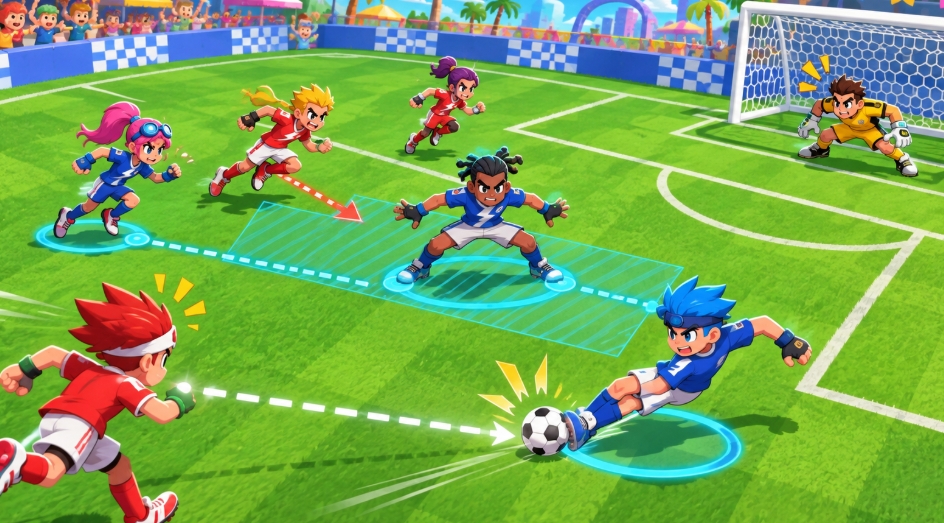
Understanding Defensive Positioning in Super Liquid Soccer
Good defending begins before the opponent reaches the penalty area. A common beginner mistake is moving directly toward the player carrying the ball, even when another opponent is positioned closer to the goal. This approach can leave open spaces that attacking players can exploit with a through pass. Instead of focusing entirely on the ball, try to observe the positions of the nearest attackers and maintain a defender between them and your goalkeeper. When an opponent advances along the side of the field, moving diagonally toward the center can help block a direct route to goal while maintaining access to potential passing lanes.
Defending also requires patience. Constantly chasing the ball can pull several players away from their positions, making it easier for opponents to create opportunities. Sometimes, remaining in front of an attacker is more effective than attempting an immediate interception. By reducing the available space and encouraging the opponent to move sideways, you gain time for teammates to recover their positions. This approach becomes particularly valuable during tournament matches, where avoiding unnecessary goals can make the difference between advancing and being eliminated.
Switching Players and Using Sprint Effectively
Super Liquid Soccer allows players to change the active footballer using Q or E. This feature is especially important when defending because the currently selected character may not be the best person to challenge an incoming attack. If an opponent moves into an open area, switching to a nearby defender can help close the gap before a dangerous shot becomes possible. The goal is not simply to select the footballer closest to the ball, but to choose someone who can block the opponent’s next movement. Sprinting with P or O can help recover lost ground, although using it at the wrong moment may cause the defender to run past the attacker.
The following table explains how to react to common defensive situations.
| Defensive situation | Recommended action | Why it helps |
|---|---|---|
| Opponent advances through the center | Move a defender into the shooting lane | Reduces the space available for a direct shot |
| Attacker runs toward an open wing | Switch to a nearby defender | Helps prevent an uncontested approach |
| Opponent prepares a through pass | Cover the space behind the defensive line | Limits opportunities for an easy breakaway |
| Ball rebounds near your goal | Move toward the loose ball and clear it | Prevents a second scoring opportunity |
| Your defender falls behind | Sprint briefly to recover position | Helps close the distance |
| Your team wins possession | Look for a safe passing option | Reduces the risk of losing the ball immediately |
These situations demonstrate why defensive decisions should change depending on the location of the ball and the opponent’s movement. Repeating the same approach throughout a match can create predictable weaknesses. Successful defending depends on recognizing danger early and selecting the appropriate response rather than relying entirely on quick reactions.
How to Recover Possession and Start a Counterattack
Winning the ball is only the first part of a successful defensive action. After an interception, players often make the mistake of immediately sprinting toward the opposing goal, even when several defenders are waiting ahead. This can result in losing possession again within seconds. A better approach involves identifying an available teammate and making a controlled pass before accelerating. The regular pass button, M, is useful when a teammate is positioned nearby, while the through pass button, I, can help exploit open space if an attacker has already started moving forward.
Counterattacks are particularly effective when the opposing team has committed several players to an attack. After recovering possession, examine the positions of your forwards and look for opportunities to move the ball into space. If the direct route is blocked, passing sideways may provide a safer alternative. A chip pass with L can also be useful when a higher ball is needed to bypass a defender. However, not every recovered ball needs to become an immediate attack. Maintaining possession can be the better decision when protecting a narrow lead or waiting for teammates to move into useful positions.
Seven Defensive Habits That Improve Your Results
Developing reliable defensive habits makes matches easier to manage, especially when opponents attack quickly. The following techniques can help reduce mistakes and improve consistency:
- Switch defenders before the opponent reaches the goal. Early player switching gives you more time to position the selected footballer.
- Protect central areas. Blocking a direct path toward the goalkeeper can force opponents into more difficult shooting positions.
- Avoid chasing every movement. Maintaining a useful defensive position is often better than following the ball without considering other attackers.
- Use sprint in short bursts. Accelerate when recovering position, then slow down to avoid running past the opponent.
- Pay attention to rebounds. A saved or blocked shot may leave the ball in a dangerous location.
- Make a safe pass after winning possession. Giving the ball away immediately can create another attack against your goal.
- Adapt when protecting a lead. Avoid unnecessary risks and concentrate on retaining possession during the closing stages of a match.
These habits become easier to apply through practice. Rather than attempting to master everything at once, concentrate on one defensive skill during each match. For example, spend an entire friendly match practicing player switching, then focus on protecting central spaces during the next game. Gradually combining these techniques can make defensive decisions more natural.
Common Defensive Mistakes and How to Correct Them
Many goals are conceded because defenders react too late or attempt to solve every situation through speed alone. When an opponent runs past the selected player, repeatedly chasing from behind may leave the defense exposed. Switching to another footballer positioned closer to the goal can provide a better opportunity to intercept the attack. Another frequent problem is committing too many players forward while trying to score. Although aggressive attacks can produce results, leaving large open spaces behind the ball makes counterattacks particularly dangerous.
Players should also avoid immediately shooting or making a risky pass after recovering possession close to their own goal. Clearing the ball toward an open teammate is generally safer than sending it directly into an opponent. If there are no reliable forward options, moving the ball sideways can provide time to reorganize. Learning to recognize these situations helps create a more balanced approach in which attacking and defending support each other.
Practice Routine for Better Defending
Improving defense does not require complicated training exercises. A few short friendly matches can provide enough opportunities to practice essential movements and reactions. During the first match, concentrate on switching between players whenever an opponent begins an attack. In the second, focus on remaining between the ball and your goalkeeper without unnecessarily chasing opponents. During the third, practice recovering possession and completing a safe pass before starting a counterattack.
Once these actions become comfortable, try applying them in tournament competitions such as the World Cup or Chumps League. These modes encourage consistent performance across several matches and provide opportunities to face different attacking situations. Pay attention to the goals you concede and identify whether they resulted from a late player switch, poor positioning, or an unsuccessful attempt to clear the ball.
Final Tips for Winning More Matches
The most effective defensive strategy in Super Liquid Soccer combines awareness, positioning, and controlled movement. Players who understand when to switch footballers and how to protect the center of the field can prevent many dangerous situations before they develop. Recovering possession also creates opportunities to launch organized attacks, making defense an important part of the overall football strategy.
Start by practicing the basics in Super Liquid Soccer, then apply these techniques during longer competitions. If you want to develop your reactions in smaller football matches, try 1 vs 1 Soccer or Football Legends. Both offer alternative ways to practice positioning, timing, and responding to opposing attacks. With consistent practice, defensive decisions become faster, possession becomes easier to maintain, and winning matches becomes less dependent on scoring opportunities alone.
